
Proving Numbers Exist
And how Relationalism can provide an answer


I am continuing my ruminations on this new idea I’m developing called Relationalism.
Relationalism is the philosophical position that relationships are not secondary to objects, but are equally real. When two things relate, that relationship itself becomes a new, real identity exactly the same as an object. This process of identities forming relationships, then become new identities, creates a natural hierarchical structure of reality.
Following on from my previous article, I am going to use this idea to explore whether it can be used to prove that numbers exist. This might be an unusual endeavor, as numbers appear and feel self-evident. But the truth is that mathematicians and philosophers don’t have a comprehensive answer to this question.
There have been several attempts to prove numbers are real objects. The first two use Set Theory, the area of maths which studies sets of collections of objects
The first attempt was to use sets to build up numbers. So, if we start with an empty set named 0, and then enclose this by another set, we create a set with one element within it, or the number 1. We then enclose this set, and create the number 2. We keep doing this until we have all the numbers. An example could be 0 is represented by an empty box, so then 1 is another box containing this empty box. 2 is a box containing 0 and 1 or 2 empty boxes, and so on.
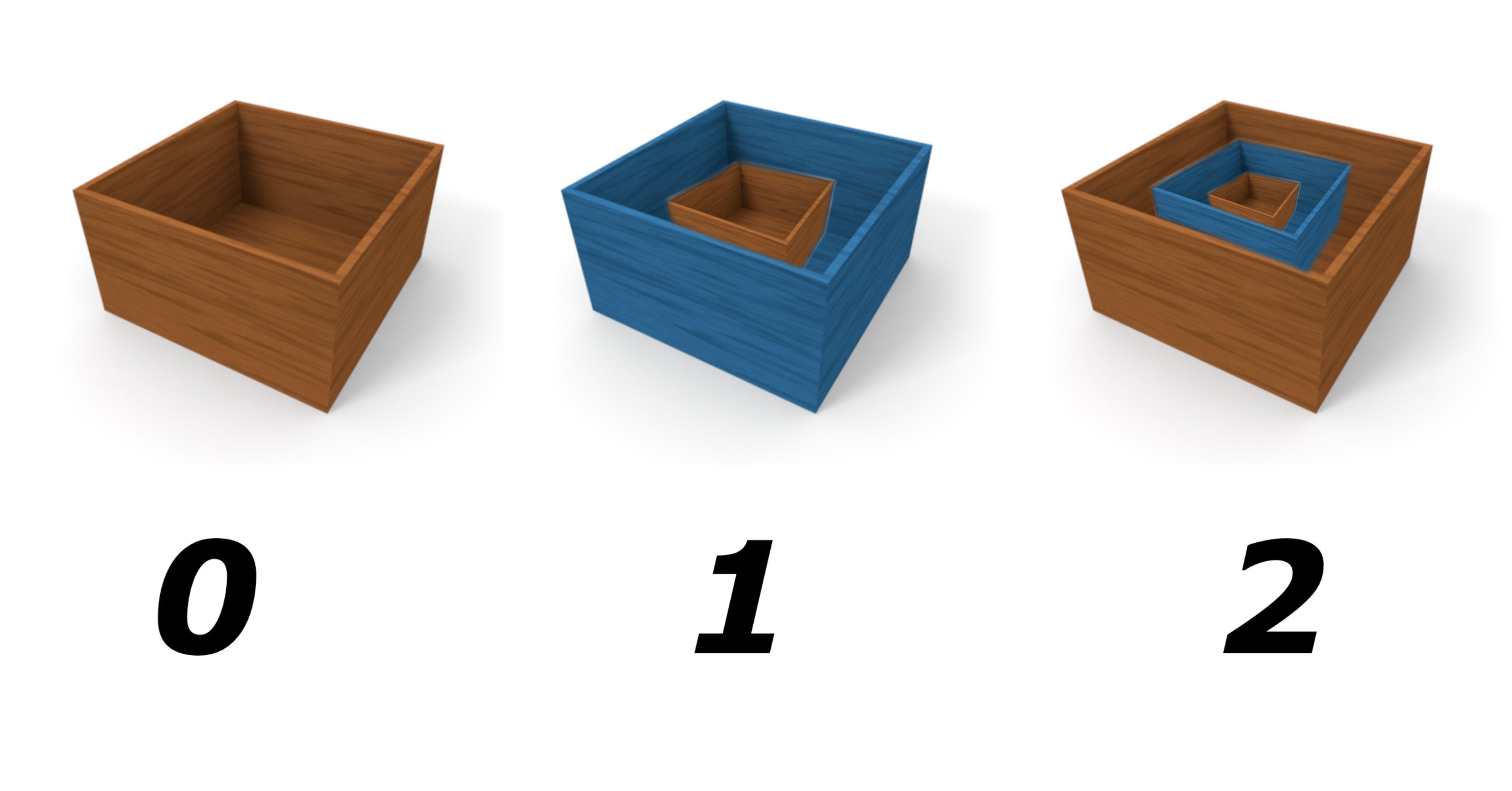
To me, this approach feels too abstract.
Another way would be to say that the number 3 is implied by the collection of all groups of three things. So the set of all collections of three cats, three dogs, three chairs, or three apples implies the number 3 exists. This idea was developed by the German philosopher and mathematician Gottlob Frege in the late 19th century.
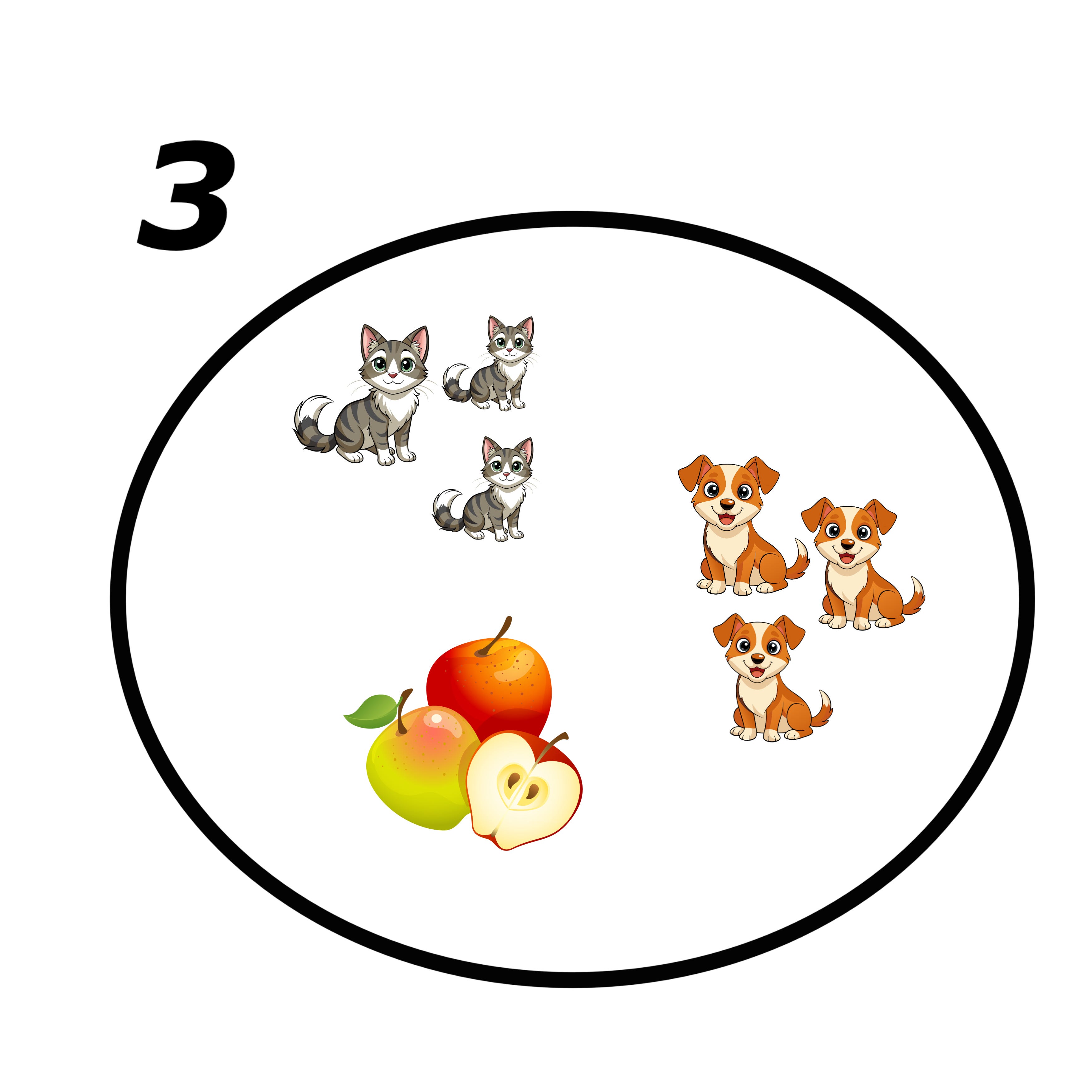
However, Bertrand Russell queried the validity of this approach. He argued that if we imagine a set which contained every collection of sets but not itself, then this is logically inconsistent. Because, we can’t have a collection of all sets without including that set.
I personally like this approach. It feels logical, but is still a little abstract.
The third idea uses Structuralism. It was developed by American philosopher Paul Benacerraf in 1965 and says numbers are not actual things at all, and have no intrinsic meaning. Instead, a number only exists as a position within a larger structure, like a number line.
For example, we know there is a number 3 because it comes after 2 and before 4. The number 3 is defined by its relationships to the other numbers around it, not because it is a real object.

This idea argues that the relationships between the numbers define the numbers themselves.
However, for me this feels incomplete. If numbers are just positions in a structure with no independent existence, then what do we mean when we say the number 17? No number has any real meaning.
Structuralism tells us how numbers relate to each other, but fails to explain what numbers actually are. It dissolves the objective reality of numbers completely.
The final common idea is Fictionalism. This says numbers don’t actually exist at all. They are useful fictions which are convenient to describe reality, and have no real existence. The main problem with this is that it feels unsatisfying to me. If numbers are purely made up, it is hard to explain why mathematics works so well in describing the real world, from building bridges, to measuring distances, and sending rockets into space.
In Relationalism, relationships are not secondary or less real than the objects they connect to, they are both equally valid.
Structuralism comes close to this by saying that the relationships between numbers are the most real part. However, I believe it goes too far by claiming that numbers have no independent reality, and they are only named positions in a structure. Relationalism corrects this by stating that as the relationships are real, then the numbers themselves must also be real too.
We may not be able to fully define or grasp the essence of a number. But, this does not mean numbers do not exist. Here, the theology of St. Gregory Palamas becomes very helpful. He makes a distinction between a thing’s essence and its energies. He taught that though we can know the Sun’s energies, its warmth and light, we cannot know its essence. It would burn us up in milliseconds.
Similarly, we may know a friend’s energies, what they laugh at, what they dress like, their interests, but we can’t know their essence, and who they truly are. We don’t have access to their thoughts, secret desires, or wants.
In the same way, we may not be able to define the essence of a number, but we can observe its energies through the real, measurable relationships it forms with other numbers. As these relationships have real world implications, the numbers themselves must also be real too.
It is reasonable to point out that Relationalism begins with an assumption. It starts with the belief that relationships are just as real as the things they connect. This is an axiom, a starting point that cannot itself be proven.
However, this assumption is not a purely abstract idea. We see the reality of relationships all around us every day, in marriages, teams, families, and ecosystems. They all show us that relationships have real existence and effects.
Because this foundational belief matches our lived experience of the world, it is a reasonable and grounded starting point, not an abstract or arbitrary one. It stems from our real experience of the world.
When we say both numbers and their relationships are real, we are asserting that the world is not cold, random, or meaningless. There is a pattern built into reality itself, both partly knowable and partly unknowable.
By recognising relationships are as equally real as the things they connect, we begin to see the world in a different way. We move from a flat, mechanical view of existence to one that is rich, relational, and deeply connected in ways we cannot conceive.
Numbers are not ghostly abstractions, fictions, or made up from sets within sets within sets. They are part of the tapestry of a living, meaningful universe. I believe this way of seeing numbers in a relational sense feels like how reality is laid out before us, and in my honest opinion, is intellectually satisfying.
Finally, I need to point out I am a lay theologian. I am not an accredited philosopher or mathematician. I just like playing with numbers and having fun.